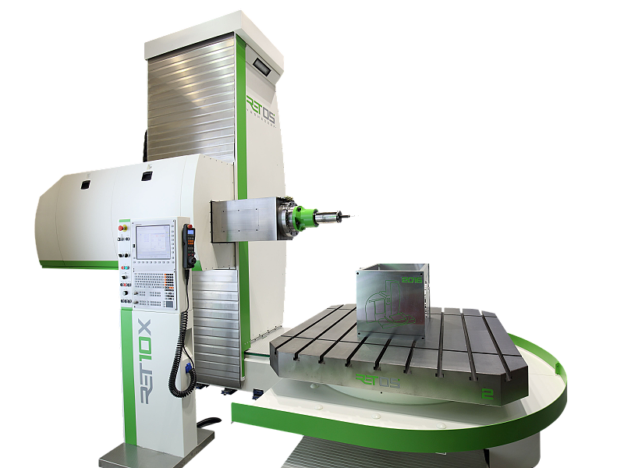
T-TYPE HORIZONTAL BORING MILL RET10X
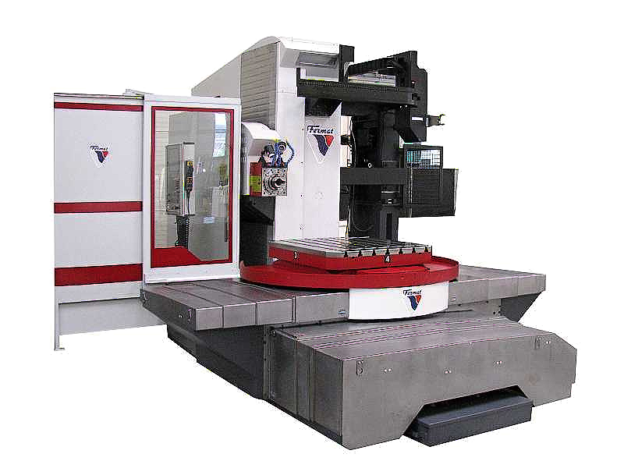
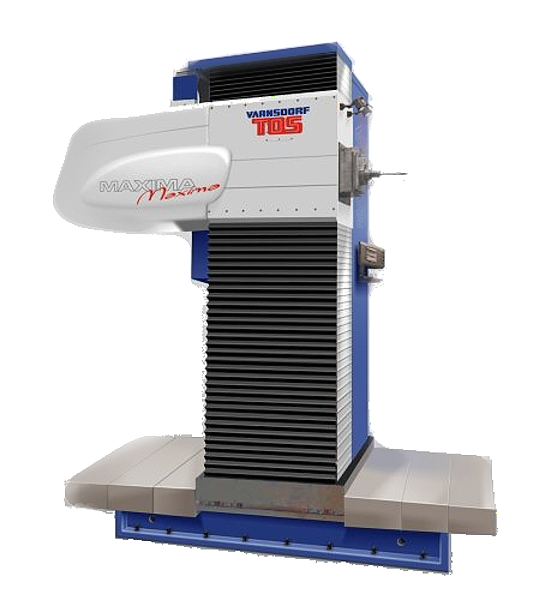
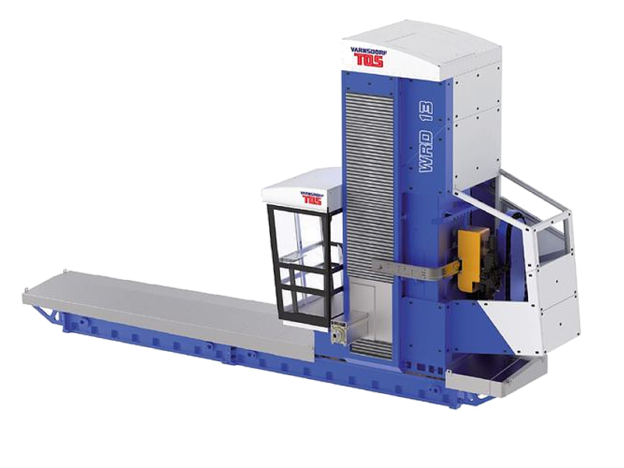
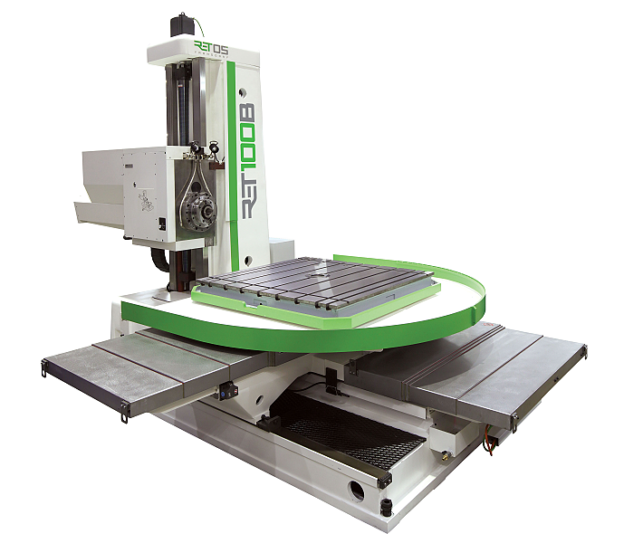
RET10X – T-TYPE HORIZONTAL BORING MILL – Thanks to its unit principle, this machine excels in a maximum variability of designfor various technological applications. According to your specific needs, you can choose between feeds in the V axis (ram) or W axis (spindle) or in both of them. Travel ranges in the main axes X, Y and Z, the size and number (1 or 2) of clamping plates with various functions (interpolation, positioning rotary tables, non-rotating tables) can be customized. In addition, milling heads, facing heads, ATCs and further accessories are available.
- Maximum variability – unit principle
- Choose travel range of basic axes Y, Z max. 2,000 mm, X max. 3,000 mm
- Rolling guideways for all axes
- Ram headstock
- Choose size and number of clamping plates / tables
- Wide range of technological accessories
FEATURES
- contouring T-type of horizontal boring machine
- 4 / 5 linear axes + rotary / non-rotary table
- sliding ram / workspindle or a combination of them
- machine designed for universal use in mechanical enigneering production
- suitable for roughing as well as for nishing
- travel ranges, number of axes, and clamping plates (1 or 2) and the level of coverage can be customized according to your specic needs
- according to your needs, option of tting with a broad spectrum of accessories, such as automatic tool changing systems (ATC), various milling heads and milling head changing systems (AHC), a facing head, tool cooling kit (CHZ), cooling through spindle axis (CHOV), oil-mist cooling (CHM) or swarf conveyor
CONTROLLING OF THE MACHINE
- all machine functions, except for clamping and unclamping, are controlled via the control panel, which consists of a keyboard, a switch panel and an LCD monitor
- the clamping and unclamping of tools is controlled by the key on the headstock
- the control panel is supplemented by a portable control panel (handwheel), which duplicates some of the basic control functions of the machine
- the control panel is swivellingly connected to the wall inside the operator housing
- the control system allows manual, semiautomatic and fully automatic modes
- the standard communication interface allows a connection with the Ethernet for easy administration and distribution of technological programs as well as diagnostics or servicing of the control system